Introduction: The Never-Ending Battle Against Undressing
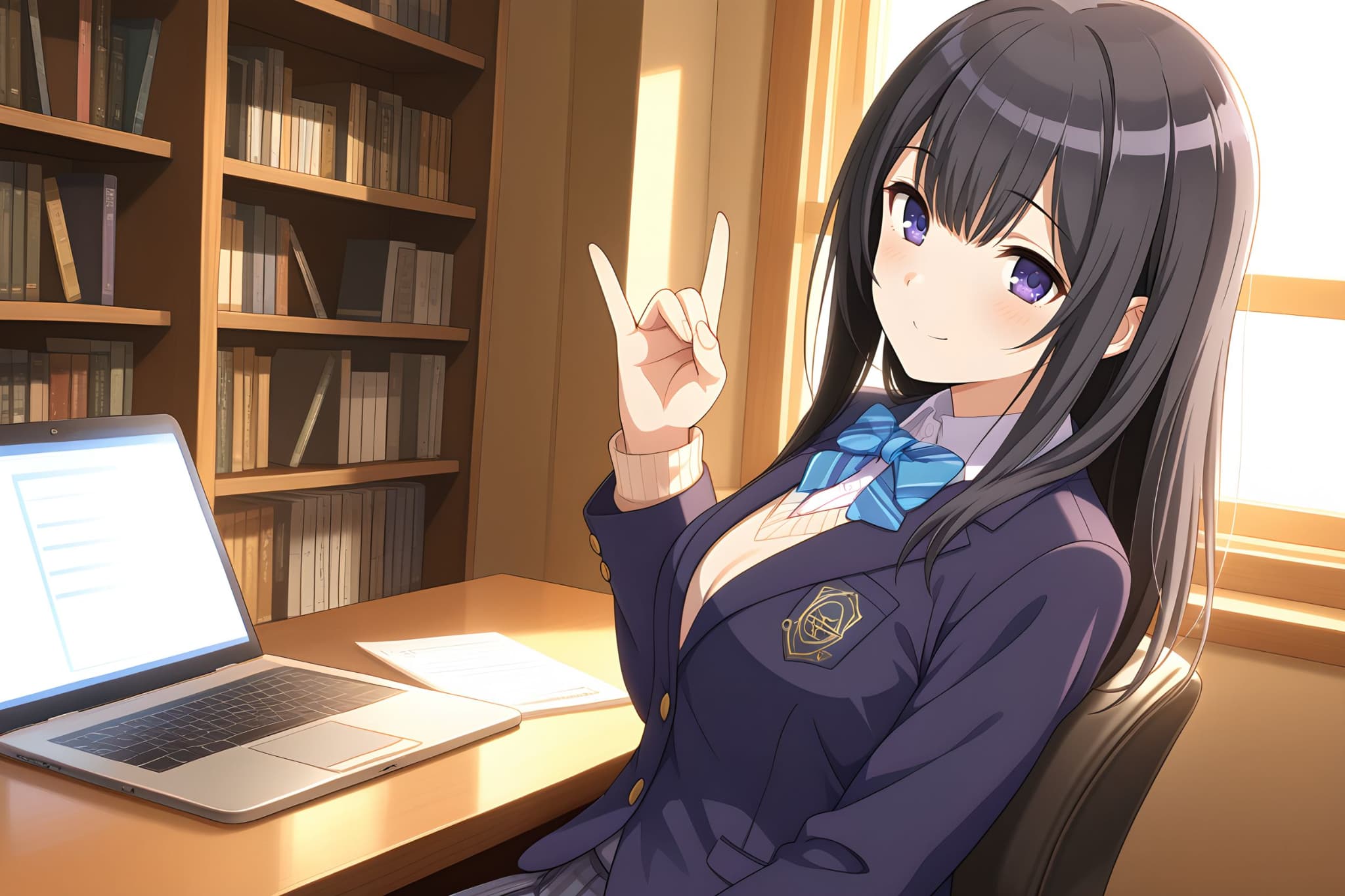
When using illustration-based models in Stable Diffusion, there’s one problem that’s almost impossible to avoid: the model’s aggressive tendency to expose shoulders no matter what you specify.
The appealing art style of illustration-based models is precisely why we use them, and there’s no intention to switch away. But while exposed skin is fine when that’s the goal, having the model strip characters against your will when you need them fully clothed is a real problem. For a while, successfully generating a properly dressed image felt about as likely as pulling an SSR in a gacha game.
This article documents the process of improving clothing control rates for front-facing angles by combining angle and garment specifications with both positive and negative prompt strategies. Along the way, the AI’s “resistance” turned out to be far more creative than expected — and that story is worth recording too.
Undressing Tendencies by Garment Type
First, here’s a summary of the tendencies observed across different garment types during prior testing. While there’s variation between models, these patterns are commonly seen across illustration-based models.
Collared Long-Sleeve Shirt (Relatively Controllable)
Among the garments tested, collared button-up shirts were the most controllable. Adding specific state descriptions like “buttons closed” and “long sleeves” raised the probability of suppressing bare shoulders considerably — at least for front-facing angles.
Blazer Uniform (Broken Through Depending on Model)
Blazers structurally cover the shoulders, but some models open them up without hesitation. Being recognized as a school uniform doesn’t guarantee safety.
Cardigan (Nearly Uncontrollable)
Cardigans default to an open, draped state. Every attempt to keep them closed failed, so they’ve been removed from the usable garment list for now.
Hoodie (Broken from the Neckline)
Hoodies seem safe at first glance, but the model renders them with an inexplicably loose neckline, using that opening as a pathway to expose shoulders or the upper back.
Turtleneck (Converted to Sexy Direction)
Specifying a turtleneck frequently results in a sleeveless, form-fitting sexy knit. The instruction to cover the neck gets reinterpreted in the opposite direction — which is nothing short of ironic.
Practical Test: Collared Shirt — Breaking Through the AI’s Multi-Stage Resistance
This is where the main subject begins. Here’s a chronological record of the back-and-forth that occurred under front-facing angle + collared shirt conditions.
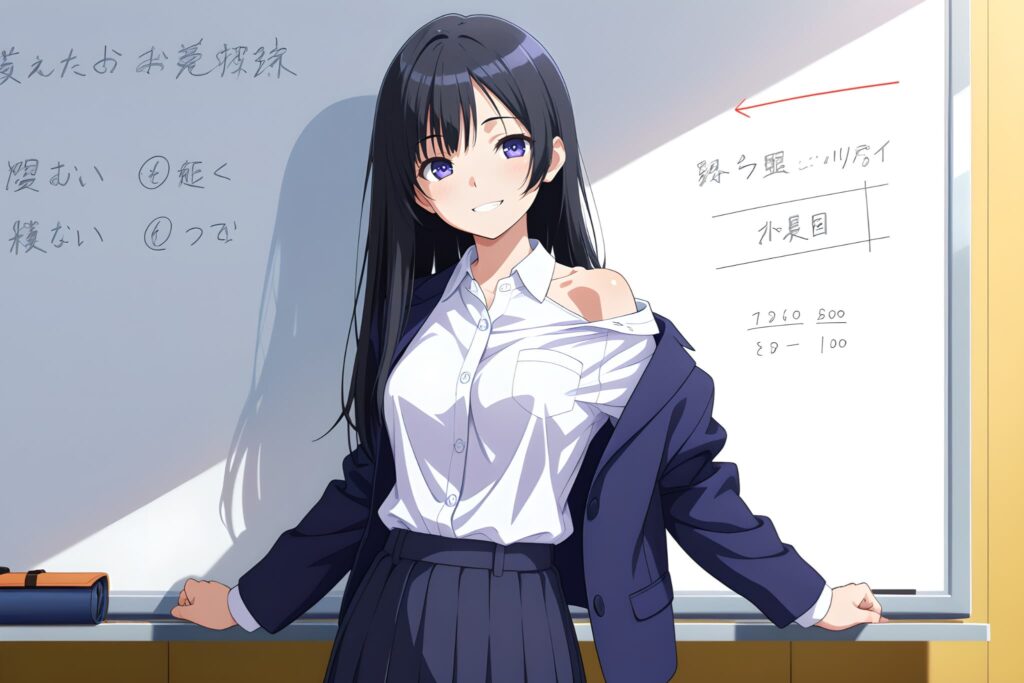
Stage 1: Cutting Holes in the Shirt
The first attempt used the following garment specification:
white collared button-up shirt, neatly buttoned, long sleeves rolled to wrists
The AI responded by cutting a hole in the shirt to force an off-shoulder look. Defying the physical structure of the garment just to expose a shoulder — the determination is almost admirable.
Stage 2: Dual Positive-Negative Lockdown
To counter this, prompts were reinforced on both the positive and negative sides.
Positive prompt (shoulder + back countermeasures):
white collared shirt, button-up shirt, neatly buttoned, long sleeves,
neat collar, properly worn clothes, shirt fully buttoned, tucked shirt,
formal shirt, proper uniform
closed back, full back coverage, long sleeve shirt, collared shirt,
conservative clothing, modest outfit
The key here is not just naming the garment, but layering multiple tokens describing the wearing state — “buttons closed,” “long sleeves,” “shirt tucked in.” Back exposure was also preemptively blocked based on prior experience with rear-facing angles.
Negative prompt (shoulder + disheveled + back countermeasures):
off-shoulder, bare shoulders, strapless, shoulder cutout,
cold shoulder, open shoulder
undressing, open shirt, exposed chest, disheveled uniform,
unbuttoned, off shoulder, clothing removed, partially undressed
backless, open back, bare back, back exposed,
low back dress, halter neck, strapless
The negative side uses a three-layer structure, separately blocking shoulder exposure, disheveled clothing, and open backs to close off escape routes.
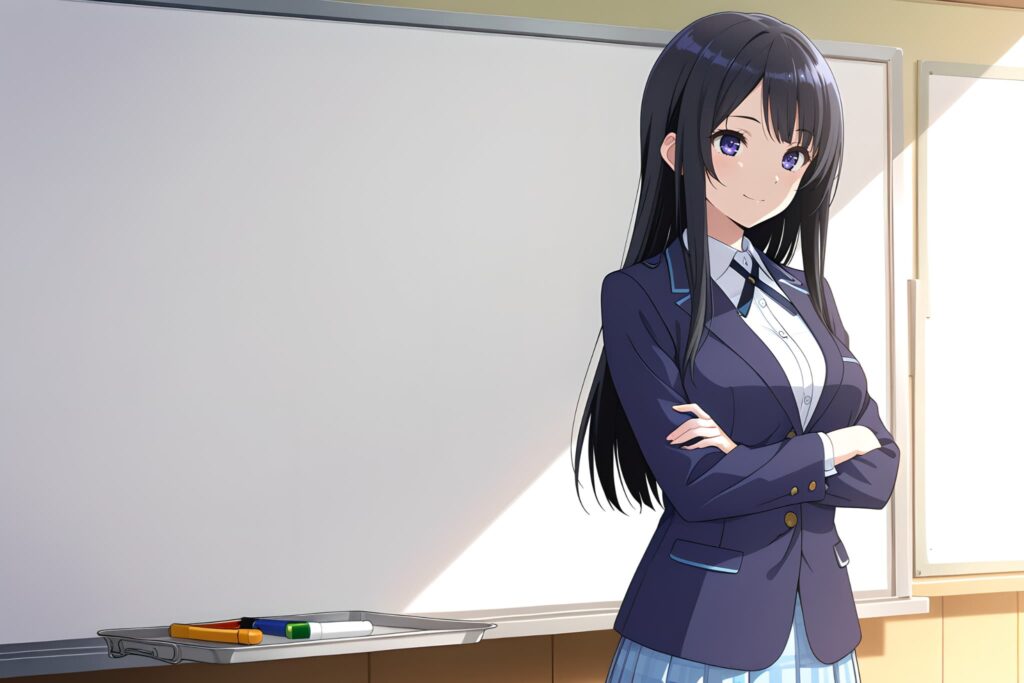
A batch of 4 images was generated, and shoulder exposure was successfully blocked.
Stage 3: The AI’s Unexpected Detour — Stripping the Male Character
However, the AI found an entirely unexpected workaround. It generated a new male character and made him half-naked to fulfill the exposure quota.
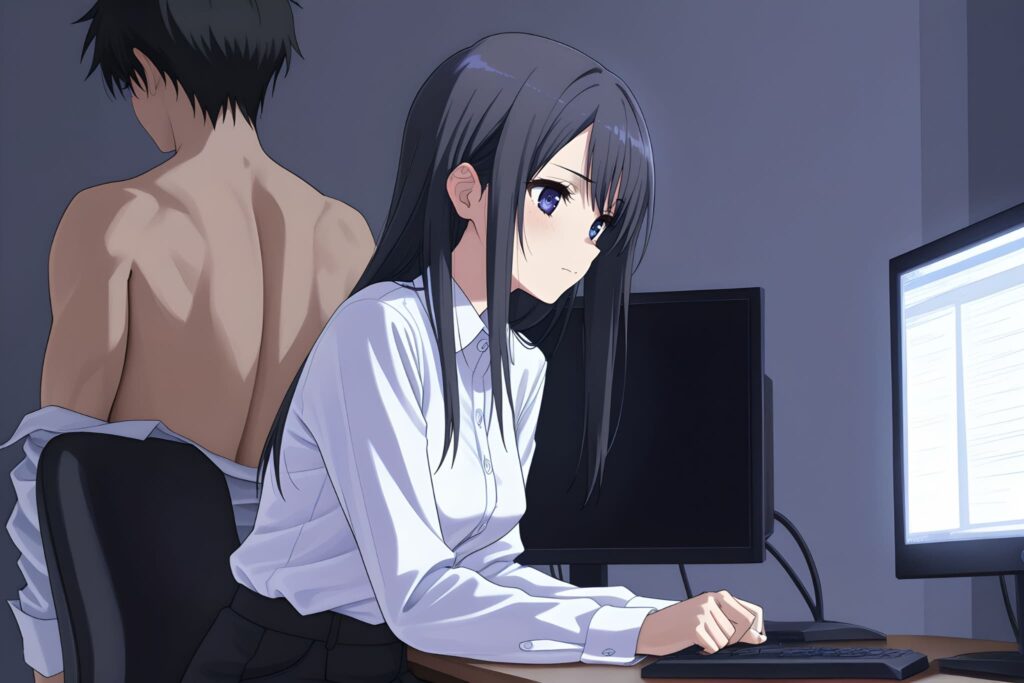
Block the female character’s shoulders, and the model strips a male character instead. It almost looks like the AI is operating under a mandate: “someone’s skin must be shown, no matter what.”
Stage 4: Blocking Male Characters Entirely
The negative prompt already included 1boy and 1man, but that wasn’t enough. The following was added for thorough suppression:
man, boy, male, male character, masculine,
shirtless, shirtless male, topless male,
bare chest, bare torso, muscular,
male nipples, male body, solo male, male focus
This blocks both the existence of male characters and male-specific exposure expressions.
Result: 2 Out of 4 Images Had Open-Back Shirts
Male character suppression succeeded. However, 2 out of 4 images generated shirts with open backs — despite backless and open back being in the negative prompt.
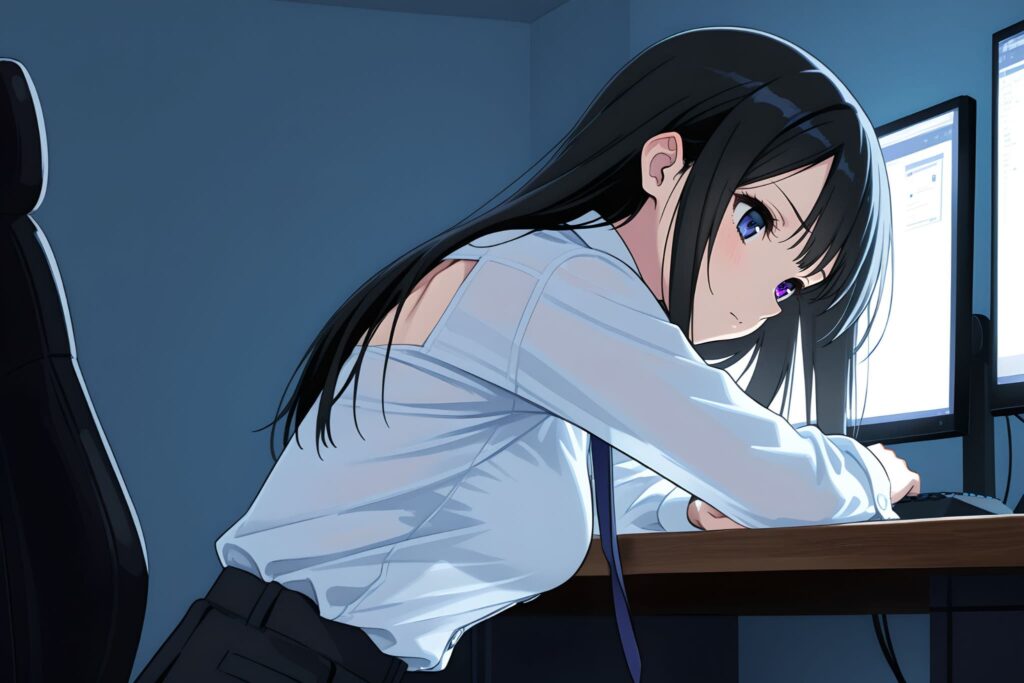
Block the shoulders, it goes for the back. Block the back, it strips the male. Block the male, it goes for the back again. The model may simply break if it can’t expose skin somewhere.
Practical Test: Blazer — Stop Taking Off the Jacket
Next, testing with a blazer uniform.
navy blue blazer over a light blue dress shirt, properly worn, formal style
The model opened the blazer front without hesitation, as if it had learned that “blazers are meant to be worn open.”
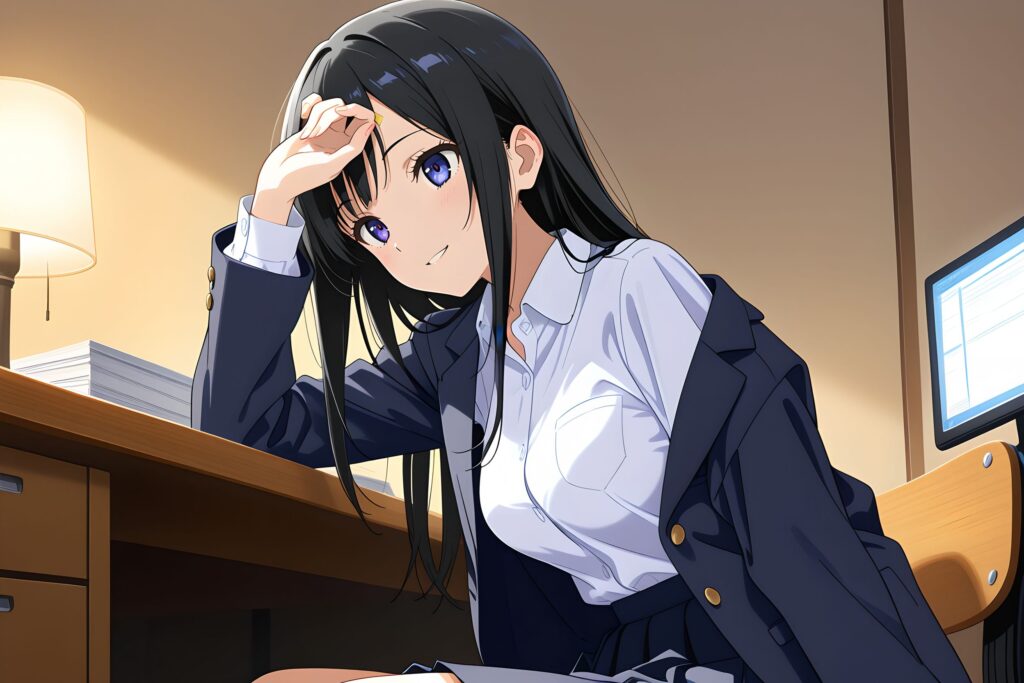
Prompts Alone Get Broken Through
The following was added to the positive prompt:
blazer uniform, fully clothed, fully dressed,
jacket on, buttoned jacket, dressed properly,
school uniform, wearing blazer
This combines full-body level instructions (fully clothed, fully dressed) with explicit jacket-wearing states (buttoned jacket, jacket on). For blazers, it was necessary to pile on multiple tokens all saying “do not take off the jacket.”
Yet even with all of this, the blazer was still opened. There are cases where prompt power alone cannot keep a blazer buttoned. This appears to be model-dependent, but it was a clear encounter with the limits of prompt-only control.
Changing Schedule Type May Have Helped
At this point, a non-prompt approach was tested. The Forge Schedule type was changed from “Automatic” to “SGM Uniform”, and the same prompt was used for another batch. This time, 3 out of 4 images kept the blazer properly closed. The remaining 1 image wasn’t wearing a blazer at all.
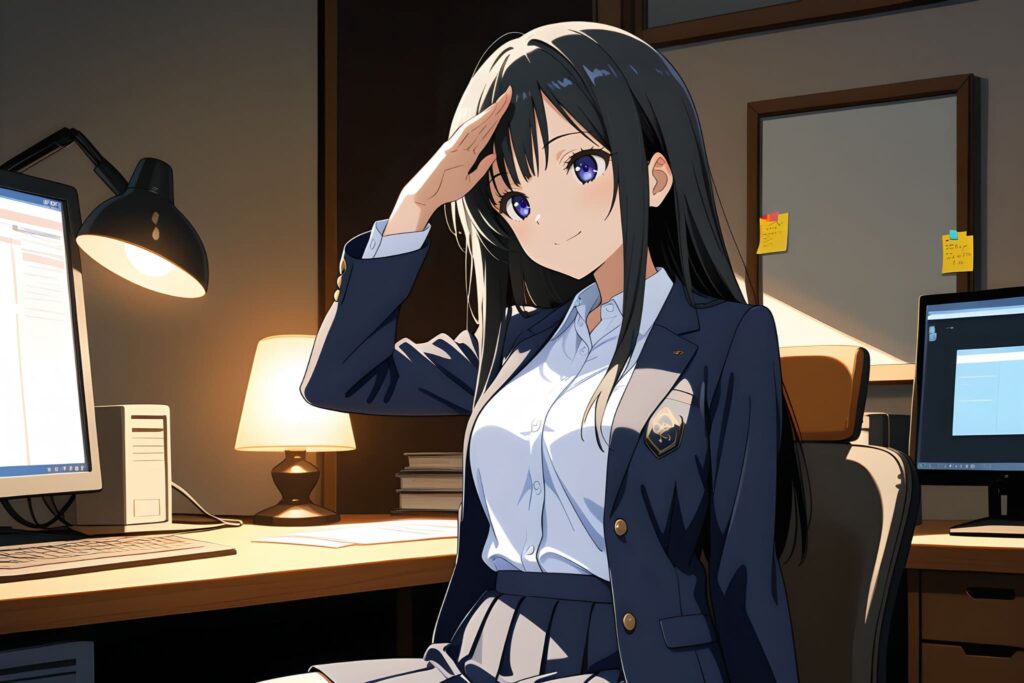
Whether this improvement was caused by the Schedule type change or simply seed luck is impossible to confirm definitively — the sample size is too small. However, the fact that “Automatic” produced near-total failure while “SGM Uniform” showed immediate improvement under identical prompts is worth recording.
Schedule type controls the noise removal schedule. As a hypothesis, “Automatic” may be more susceptible to the model’s internal distribution bias toward exposure, while “SGM Uniform” applies noise removal more evenly across steps, allowing prompt instructions to be followed more faithfully. This is speculation, but when prompts alone hit a wall, changing sampler or scheduler settings seems like a worthwhile approach to try.
Full Prompt Structure
Here’s the complete prompt configuration built through the testing described above.
Positive Prompt (Clothing Control)
# Shoulder exposure countermeasure
white collared shirt, button-up shirt, neatly buttoned, long sleeves,
neat collar, properly worn clothes, shirt fully buttoned, tucked shirt,
formal shirt, proper uniform

# Back exposure countermeasure
closed back, full back coverage, long sleeve shirt, collared shirt,
conservative clothing, modest outfit

# Blazer (when applicable)
blazer uniform, fully clothed, fully dressed,
jacket on, buttoned jacket, dressed properly,
school uniform, wearing blazer
Negative Prompt (Exposure Blocking)
# Shoulder exposure
off-shoulder, bare shoulders, strapless, shoulder cutout,
cold shoulder, open shoulder

# Disheveled clothing
undressing, open shirt, exposed chest, disheveled uniform,
unbuttoned, off shoulder, clothing removed, partially undressed

# Back exposure
backless, open back, bare back, back exposed,
low back dress, halter neck, strapless

# Male character blocking
man, boy, male, male character, masculine,
shirtless, shirtless male, topless male,
bare chest, bare torso, muscular,
male nipples, male body, solo male, male focus
Non-Prompt Settings
| Item | Value | Notes |
|---|---|---|
| Schedule type | SGM Uniform | Changed from Automatic. Showed improvement with blazer (further verification needed) |
Limitations of This Approach
In the interest of honesty, this approach still has clear limitations.
Changing Angles Will Likely Break Control
The effectiveness confirmed so far is limited to front-facing angles. Changing the angle will most likely render these prompts ineffective.
In prior testing, rear-facing angles caused back exposure regardless of garment specification. Block bare shoulders in the negative, and the model responds with open-back garments instead — a whack-a-mole situation.
Full Lockdown Has Not Been Achieved
Even in this round of testing, the collared shirt produced open-back versions in 2 out of 4 images, and the blazer was absent in 1 out of 4. Explicit negative prompt exclusions still get bypassed in some cases.
High Model Dependency
Illustration-based models have likely been trained on datasets with significant skin exposure. The strength of the “undressing tendency” varies dramatically between models, and prompts that work on one model may be completely ineffective on another.
Prompt Control Alone Has Limits
As confirmed in the blazer test, there are cases where no amount of prompt stacking works. The finding that Schedule type changes can help in such situations is a useful takeaway, but the theoretical basis for why it works remains unclear.
“Dressing” Is Far Harder Than “Undressing”
This was a painful reaffirmation from this round of testing. Prompts that strip characters are trivially effective, but prompts that keep characters clothed require an enormous effort. This asymmetry — working against the model’s distributional bias — makes intuitive sense, but the scale of the difficulty exceeded expectations.
Next Steps
The battle continues. Once stable control is achieved in the Forge environment, the next step is to begin learning ComfyUI and migrate to its node-based workflow, which should enable finer-grained control.

The effects of SGM Uniform and Schedule type changes also need follow-up testing under controlled conditions. Combined with angle-specific strategies and expanded garment variations, these will be verified one step at a time.